

Tyre Deflators and Gauges
Filter by
Sorting by
-
 Solution X$99.99 ^ $74.99 Club Price★★★★★ ★★★★★ (2)New
 -
 XTM 4x4 Accessories$149.99 ^ $99.99 Club Price★★★★★ ★★★★★ (25)





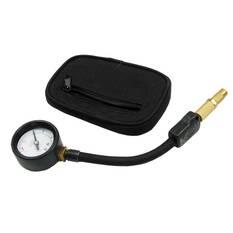
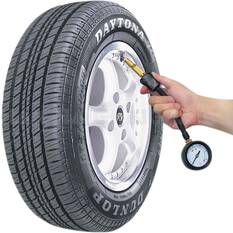
Filter by
Why Tyre Deflation Matters for 4WD Touring
Lowering your tyre pressure increases the tyre's footprint on soft or uneven ground, giving you more traction and a smoother ride over corrugations. Airing down is one of the simplest changes you can make to how your 4WD handles sand, mud or corrugations.
If your PSI is too high when you're on sand or a rutted track, you'll spin, dig in, or feel every corrugation through the cabin. Get them right for the terrain and the same vehicle handles the same track with a lot less drama. Getting an accurate PSI reading matters just as much, since guessing pressure defeats the purpose of airing down deliberately.
When Airing Down Actually Helps
- Soft sand where extra footprint is the difference between rolling and digging in.
- Corrugated tracks where lower pressure smooths out the ride.
- Mud and loose surfaces where traction matters more than outright speed.
The right pressure for your vehicle and tyres depends on your setup and load, so check your vehicle and tyre manufacturer's guidance rather than relying on a figure you've heard applies universally!
Manual vs Digital Tyre Deflators: Choosing Your Setup
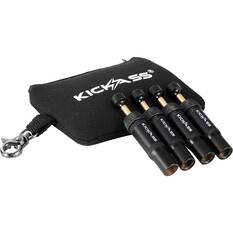
A manual deflator is pre-set to a specific pressure and left on the valve until it stops hissing, while a digital gauge lets you dial in and monitor an exact figure as you go. Both types get your tyres down to the pressure you want, but they go about it quite differently.
Manual Set-and-Forget Deflator
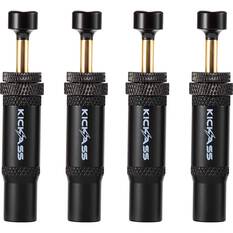
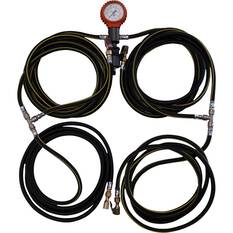
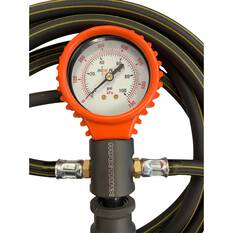
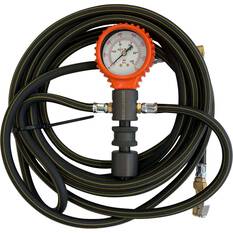
Screw a manual deflator onto each valve, set it to your target pressure, and it does the rest without you crouching by each tyre watching a gauge. This suits you if you want a simple, repeatable process across all four tyres without actively monitoring each one.
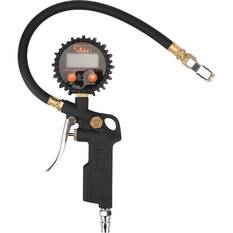
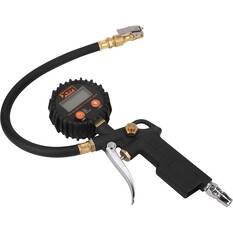
Digital Inflate and Deflate Gauges
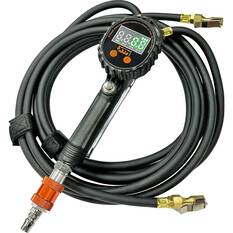
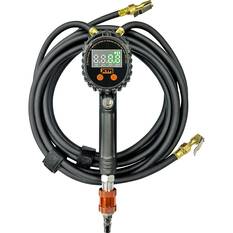
A digital gauge gives you a precise, real-time reading as you inflate or deflate, which suits you if you want tighter control over the exact figure. It's also useful for double-checking pressure after airing up again, not just for the deflation process.
If you'd rather set it and walk away, a manual deflator suits your style. If you want to watch the exact number and adjust on the fly, a digital gauge gives you that extra control.
Tyre Gauges: Getting an Accurate Reading Every Time
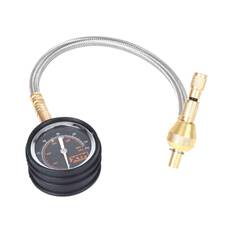
A deflator is only half the equation, so you also need a reliable way to check the pressure you've landed on, whether that's built in or a separate gauge. An inaccurate reading undoes the whole point of airing down, since you could run pressures well off what you intended without realising it.
Why Accuracy Matters More Than You'd Think
A few PSI out doesn't sound like much, but it's often the difference between a tyre that's optimised for the terrain and one that's still working against you. Check the accuracy rating listed for any gauge you're considering rather than assuming every gauge performs the same.
Getting a Reliable Reading
- Check the tyre when it's cold for the most consistent, comparable reading.
- Use the same gauge each time so you're comparing apples with apples.
- Confirm the gauge's accuracy rating if precise pressures matter to you.
Get Everything You Need for Tyre Pressure Management
Shop the full range of tyre deflators and gauges above, and once you're back on the blacktop, our air compressors range gets you reinflated properly. It's worth adding a tyre repair kit to the same trip so you're covered if a track bites.
- Club pricing with exclusive member-only deals.
- Price Match if you find it cheaper elsewhere.
- Click & Collect so your gear's ready in as little as 1 hour.
Frequently Asked Questions
What tyre pressure should I run for sand vs corrugated tracks?
This depends on your specific vehicle, tyres and load, so there's no universal number that applies across every setup. Check your vehicle and tyre manufacturer's guidance for recommended pressures by terrain, and adjust from there based on how your vehicle handles on the day.
Are manual set-and-forget deflators as accurate as digital gauges?
Accuracy varies by specific product rather than by category alone, so check the rating listed for the deflator or gauge you're considering. Many manual deflators are accurate for everyday touring, but if precise pressure control matters to you, a digital gauge gives you a real-time figure to check against.
Can I use the same deflator across different tyre sizes?
Most deflators attach to a standard valve and aren't limited by tyre size itself, since they deflate through the valve rather than measuring the tyre. Check the product's valve compatibility to confirm it suits your vehicle's valve type before you buy.
Do I need a separate gauge if my deflator has one built in?
Not necessarily, as many deflators include a built-in gauge that's fine for everyday touring. A separate, dedicated gauge is worth adding if you want a second way to double-check readings, or if you want more precise control than your deflator's built-in gauge offers.